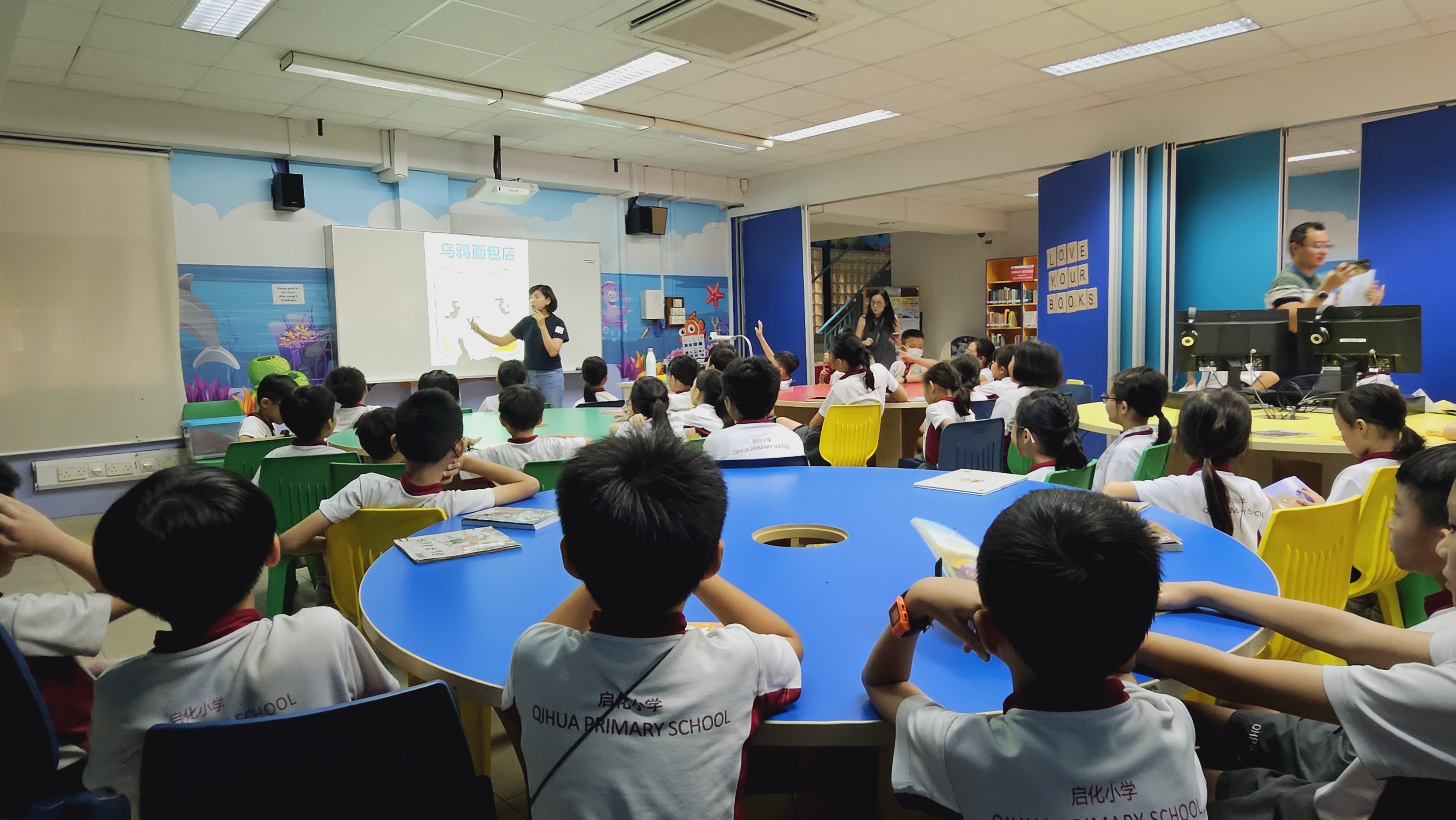
Secondary Chinese Tuition in Singapore
Skylace offers structured secondary Chinese tuition in Singapore designed to help students strengthen comprehension, writing, vocabulary usage and oral expression across Sec 1 to Sec 3. The programme supports students who need clearer answering techniques, stronger writing structure, better language application and more confidence in handling the increasing demands of secondary school Chinese.
Secondary school is an important stage because Chinese becomes more complex in both reading and expression. At this level, students often need more than memorisation. They benefit from structured support that helps them understand question requirements more clearly, organise ideas more effectively and respond with greater accuracy in both written and oral components.
Enquire NowWhy Secondary Chinese Tuition Matters
Many students find the transition into secondary Chinese difficult because the demands increase quickly. Texts become more complex, comprehension requires deeper analysis, writing tasks need clearer organisation, and students are expected to express ideas more convincingly in both oral and written work.
Without structured support, students may continue memorising vocabulary without knowing how to apply it well in context. Secondary Chinese tuition helps bridge that gap by teaching students how to understand passages more accurately, structure answers more clearly and build confidence in using Chinese with greater precision.
Common Challenges Students Face in Secondary Chinese
Many students do not struggle because they are incapable of doing well in Chinese. They struggle because the language demands become more complex, the questions require deeper analysis, and they have not yet developed strong enough habits in comprehension, writing and expression.
Misunderstanding Question Requirements
Students often know the content but misread what the question is actually asking.
Weak Answer Structure
Students may have ideas but struggle to organise them clearly in written responses.
Vocabulary Without Application
Some students memorise words but do not know how to use them accurately in context.
Limited Oral Confidence
Students may hesitate in spoken Chinese because they are unsure how to organise and express their ideas.
Difficulty Transitioning into Secondary-Level Demands
Sec 1 students in particular may struggle with longer passages, more formal writing formats and greater analytical expectations.
Frequently Asked Questions About Secondary Chinese Tuition
What does secondary Chinese tuition in Singapore focus on?
Secondary Chinese tuition usually focuses on comprehension, writing, vocabulary usage, oral expression and exam-related answering techniques to help students meet the demands of school-based Chinese.
What does Secondary 1 Chinese tuition focus on?
Secondary 1 Chinese tuition focuses on helping students adapt to longer passages, more demanding comprehension questions, clearer answer structure, better vocabulary application and stronger oral confidence.
Who is Higher Chinese tuition for at secondary level?
Higher Chinese tuition is for students who need additional support with more advanced texts, deeper comprehension, stronger written organisation and more precise language use.
How is Higher Chinese different from standard secondary Chinese?
Higher Chinese usually demands more critical reading, abstract understanding, vocabulary precision and clearer expression in both written and oral work.
Will this help with writing and composition?
Yes. Structured support can help students improve planning, organisation, essay structure, personal email formats and clarity in written responses.
Will this help with oral and pronunciation?
Yes. Oral practice, response frameworks and guided speaking support can help students build greater confidence and clarity in expression.
Which levels does Skylace support?
The secondary programme supports students from Sec 1 to Sec 3, including Higher Chinese learners. Source
How do I know if my child needs secondary Chinese tuition?
If your child struggles with comprehension, writing structure, vocabulary application, oral confidence or adapting to secondary-level Chinese demands, structured support may be helpful.








.jpeg)